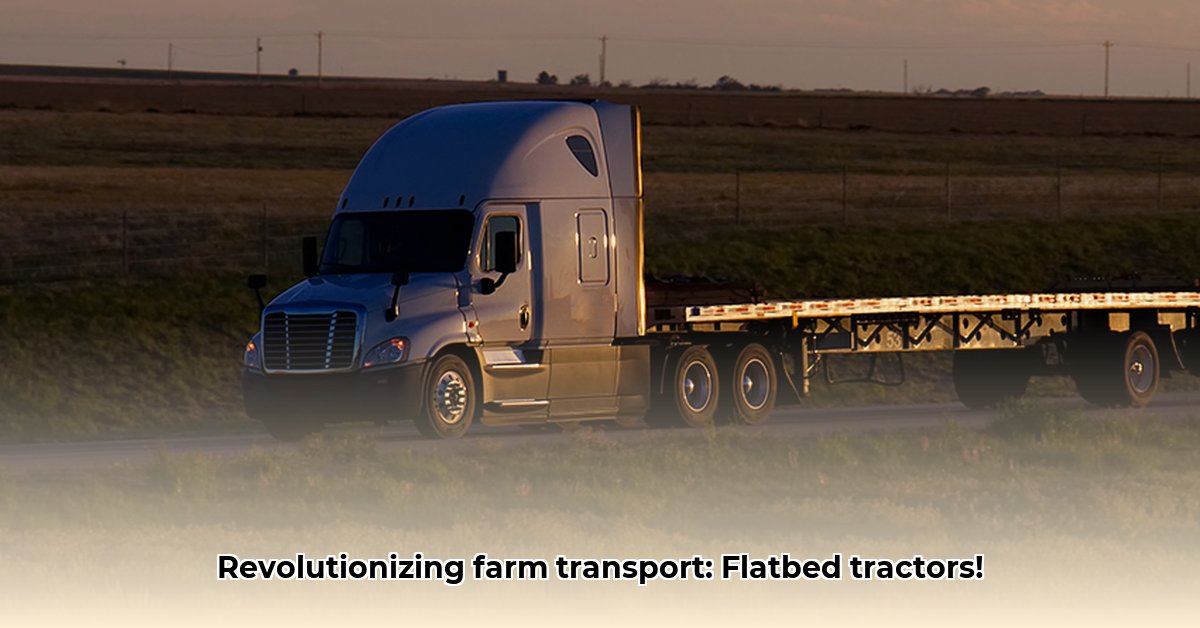
Flatbed Tractor Trailers: A Cornerstone of Sustainable Agriculture
For years, the humble flatbed tractor trailer has quietly played a crucial role in agriculture, often overlooked amidst the focus on technological advancements and innovative farming practices. Yet, these unsung workhorses offer a surprisingly significant contribution to sustainable farming, primarily through enhanced efficiency and reduced environmental impact. How can a seemingly simple flatbed trailer make such a difference? It's all about optimizing transportation, a critical yet often underappreciated aspect of modern agriculture. To understand the scale of these operations, learn more about average tractor-trailer weight.
The transportation of crops, equipment, and supplies is a substantial undertaking, consuming considerable resources and impacting the environment. Flatbed trailers, with their versatility, offer a powerful tool for mitigating these challenges. Unlike enclosed trailers, which are specialized for specific types of cargo, flatbeds provide unparalleled adaptability. From bulky farm machinery to delicate produce, they can transport virtually any agricultural commodity, consolidating multiple loads into fewer trips. This translates directly to reduced fuel consumption, lower emissions, and minimized environmental impact. But the benefits extend far beyond just reduced fuel costs.
How Flatbeds Enhance Sustainable Farming Practices
The advantages of utilizing flatbed trailers in sustainable farming practices are multifaceted:
Reduced Fuel Consumption and Emissions: By efficiently consolidating loads and strategically planning routes, farmers significantly reduce the number of trips required, directly translating into lower fuel consumption and a smaller carbon footprint. This simple yet effective strategy makes a tangible difference in the environmental impact of agricultural operations.
Significant Cost Savings: Fewer trips mean reduced transportation expenses, freeing up valuable capital for reinvestment in other sustainable practices such as renewable energy technologies, soil improvement techniques, or the acquisition of more fuel-efficient equipment. This economic advantage directly supports the long-term financial sustainability of the farm.
Unmatched Versatility: A Single Solution for Diverse Needs: The open design of a flatbed trailer lends itself to a wide range of agricultural transport needs. This versatility eliminates the need for a large fleet of specialized trailers, simplifying logistics, reducing operational complexity, and maximizing efficiency. This streamlined approach contributes directly to both economic and environmental sustainability.
Safeguarding Precious Cargo: While the open design of a flatbed might seem less protective, proper securing techniques are paramount. With appropriate strategies—utilizing sturdy straps, chains, and other securing equipment—the risks of damage or spoilage during transport can be minimized. This careful handling ensures minimal waste, protecting both the economic and environmental integrity of the farm's operation.
Speed and Freshness: Minimizing Time to Market: Efficient transportation isn't just about cost savings; it directly impacts product quality. Speedy transport of perishable goods minimizes spoilage and extends shelf life, reducing waste and improving the potential for better market prices. This directly impacts the farm's financial standing, supporting its overall sustainability.
"Efficient transportation has a direct impact on the bottom line," notes Dr. Emily Carter, Professor of Chemical and Biomolecular Engineering at Princeton University. "By reducing fuel consumption and transportation costs, farmers can allocate more resources to sustainable practices, ultimately enhancing the viability of their operations."
Flatbeds vs. Other Transport Options: A Comparative Analysis
While flatbeds offer numerous advantages, it is crucial to weigh them against other transportation options commonly used in agriculture:
| Transportation Method | Advantages | Disadvantages | Sustainability Considerations |
|---|---|---|---|
| Flatbed Tractor Trailer | Versatile, cost-effective, efficient | Requires careful load securing, weather vulnerability | Generally high; can be diminished by weather conditions |
| Enclosed Trailers | Protects cargo from weather elements | Less versatile, higher initial cost, less fuel-efficient | Mixed; improved cargo protection offsets higher fuel consumption |
| Smaller Trucks | Better maneuverability, suitable for smaller farms | Less efficient for large volumes, higher fuel consumption per unit | Can be positive for small-scale operations; less fuel efficient for large volumes |
| Rail | Very cost-effective for massive volumes | Limited accessibility, slow transit times | Positively impacts long-distance transportation; limited access for many farmers |
Actionable Steps for Optimizing Efficiency and Sustainability
To fully leverage the benefits of flatbed trailers for sustainable farming, consider the following practical steps:
Master Load Planning: Optimize load distribution to maximize capacity and minimize waste. Proper weight distribution also improves fuel efficiency.
Strategic Route Planning: Utilize GPS technology and route-planning software to identify the most fuel-efficient routes, considering traffic, road conditions, and potential delays.
Secure Loads Effectively: Invest in high-quality securing equipment and provide comprehensive training on proper techniques to prevent damage and accidents.
Prioritize Regular Maintenance: Consistent maintenance of your flatbed fleet ensures fuel efficiency and extends the lifespan of your equipment.
Explore Alternative Fuels: Investigate the use of biodiesel or other renewable fuels whenever feasible to further reduce your environmental footprint.
Calculating ROI on Sustainable Farming Investments
A key factor in adopting sustainable farming practices is calculating the return on investment (ROI). While seemingly straightforward, calculating ROI for sustainable farming requires a comprehensive approach that accounts for long-term benefits beyond immediate financial gains. This includes considering not only direct cost savings but also the positive impact on soil health, reduced water usage, and carbon sequestration.
Three Pivotal Points for ROI Calculation:
- Holistic Cost Analysis: Include all costs: initial investment, ongoing maintenance, labor, and potential opportunity costs.
- Accurate Revenue Projections: Realistically estimate increased yields, fluctuating commodity prices, and potential government subsidies or carbon credits.
- Long-Term Value Assessment: Quantify non-financial benefits like improved soil health and reduced environmental impact.
By incorporating these factors into your ROI calculation, you can make informed decisions about investments that align with both your financial goals and your commitment to sustainable farming. The future of sustainable agriculture hinges on such informed decisions. The flatbed, in its often-unseen role, is a crucial piece of this puzzle.